
Best Deck Railing Materials for Massachusetts Homes
A deck railing has to do more than look good from the yard. It needs to protect people, hold up through wet springs and freezing winters, and meet applicable building-code requirements. The best deck railing materials for a Greater Boston home depend on your deck’s structure, exposure to weather, maintenance expectations, budget, and the style you want to carry from the house into the outdoor space.
For many homeowners, railing decisions happen after the deck surface and framing have already been selected. That can create an avoidable mismatch: a low-maintenance composite deck paired with a railing that needs regular painting, or a modern cable system installed on posts that were not designed to resist its tension. Choosing the railing early helps the entire project come together cleanly and safely.
What a Deck Railing Needs to Handle in Massachusetts
Massachusetts weather is hard on exterior construction. Rain, snow, ice, strong sun, moisture trapped near the ground, and repeated freeze-thaw cycles can all affect railing materials and connections. A material that performs well in a mild climate may require more upkeep here, especially on an elevated deck or a deck exposed to prevailing weather.
Safety comes first. Residential deck guards and stair handrails must meet code requirements for height, openings, strength, and placement. The exact requirements can vary based on the deck layout, height above grade, stairs, and local enforcement. A proper project scope should account for the current code, permit requirements where applicable, and the condition of the existing framing and ledger before a new railing system is installed.
The railing also needs to suit how you use the space. A family with young children may prioritize a secure, easy-to-clean infill system with minimal climbable features. A homeowner with a wooded backyard or water view may want the least obstructed sightline possible. Neither approach is automatically better. The right answer comes from balancing safety, maintenance, appearance, and the long-term plan for the property.
Best Deck Railing Materials Compared
Pressure-Treated Wood and Cedar
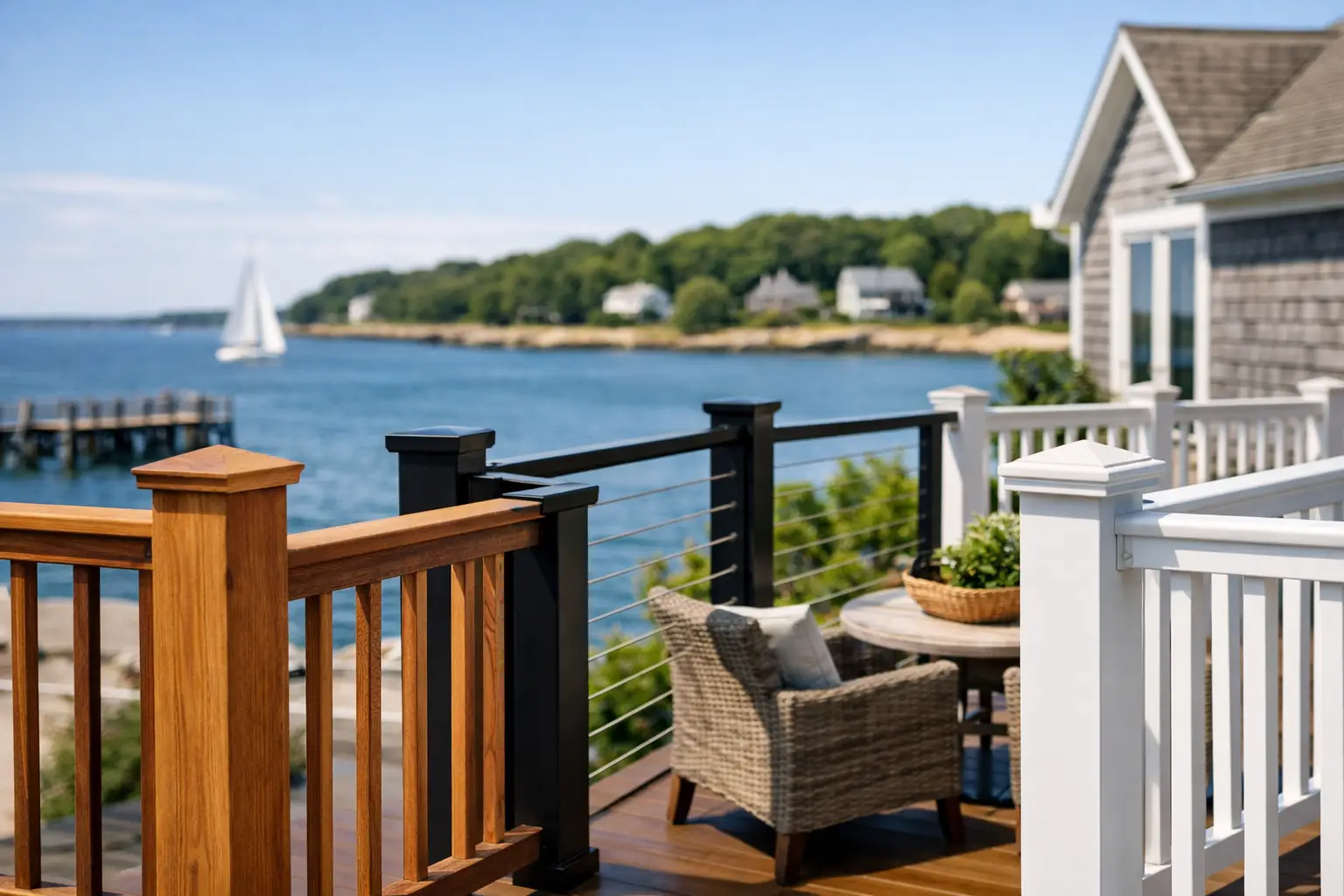
Wood railings remain a practical choice for traditional New England homes, porches, and decks where a painted or stained finish is part of the design. Pressure-treated lumber is typically the more budget-conscious option and can be built to match custom deck details. Cedar offers a more refined natural appearance and is valued for its natural resistance to decay, though it still needs routine care.
The advantage of wood is flexibility. It can be cut and shaped for custom stair runs, integrated benches, picture-frame details, and rail profiles that fit an older home. When properly built, it is strong, familiar, and easy to repair in sections.
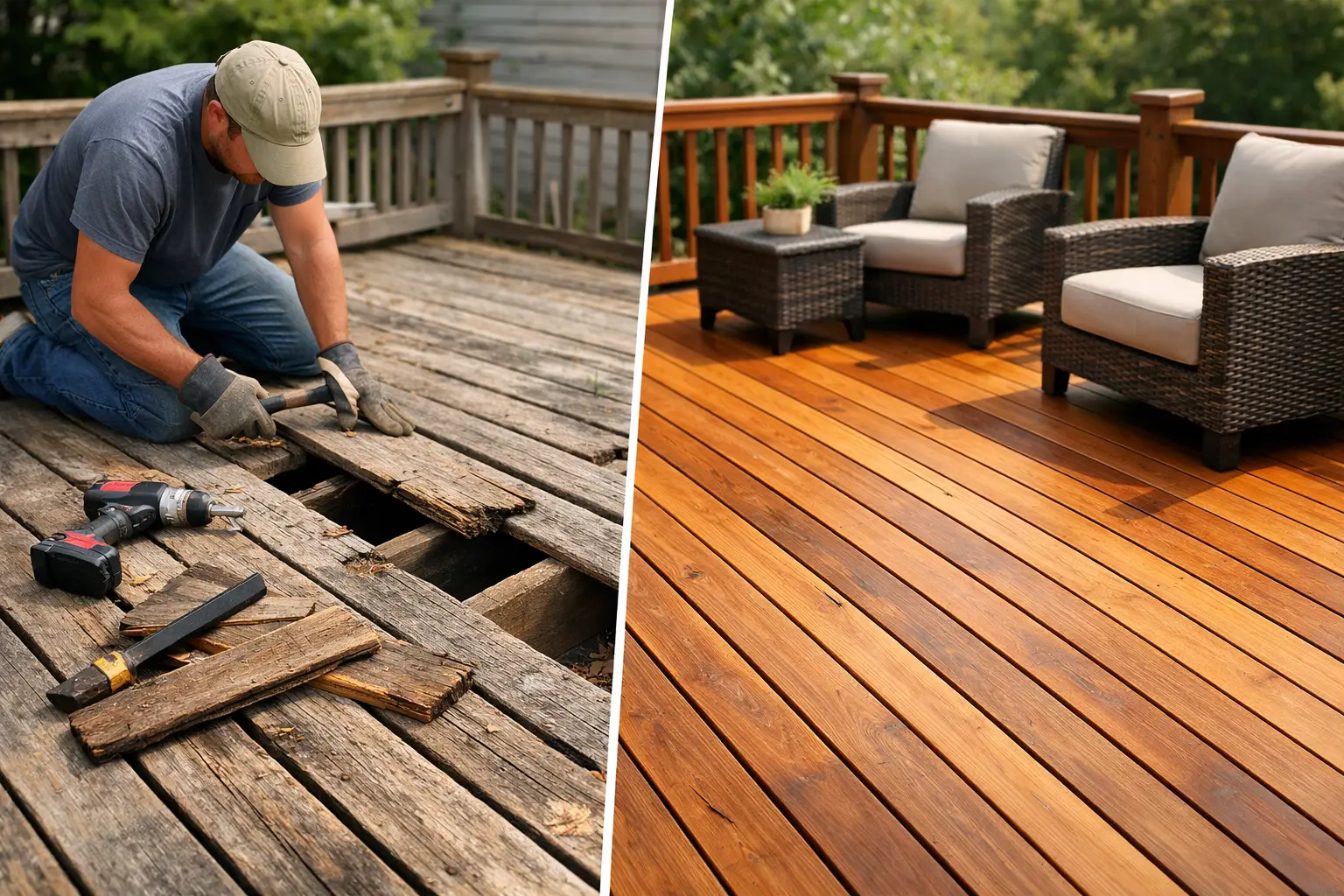
The trade-off is maintenance. Wood can check, split, fade, and absorb moisture over time. Paint or stain eventually needs renewal, and railing tops are especially exposed to water and sun. Fasteners, post bases, and the connection between the railing and deck framing also need periodic inspection. For homeowners who do not mind maintaining exterior wood, it remains a dependable option. For those looking to minimize weekend upkeep, another material may be a better fit.
Composite Railing
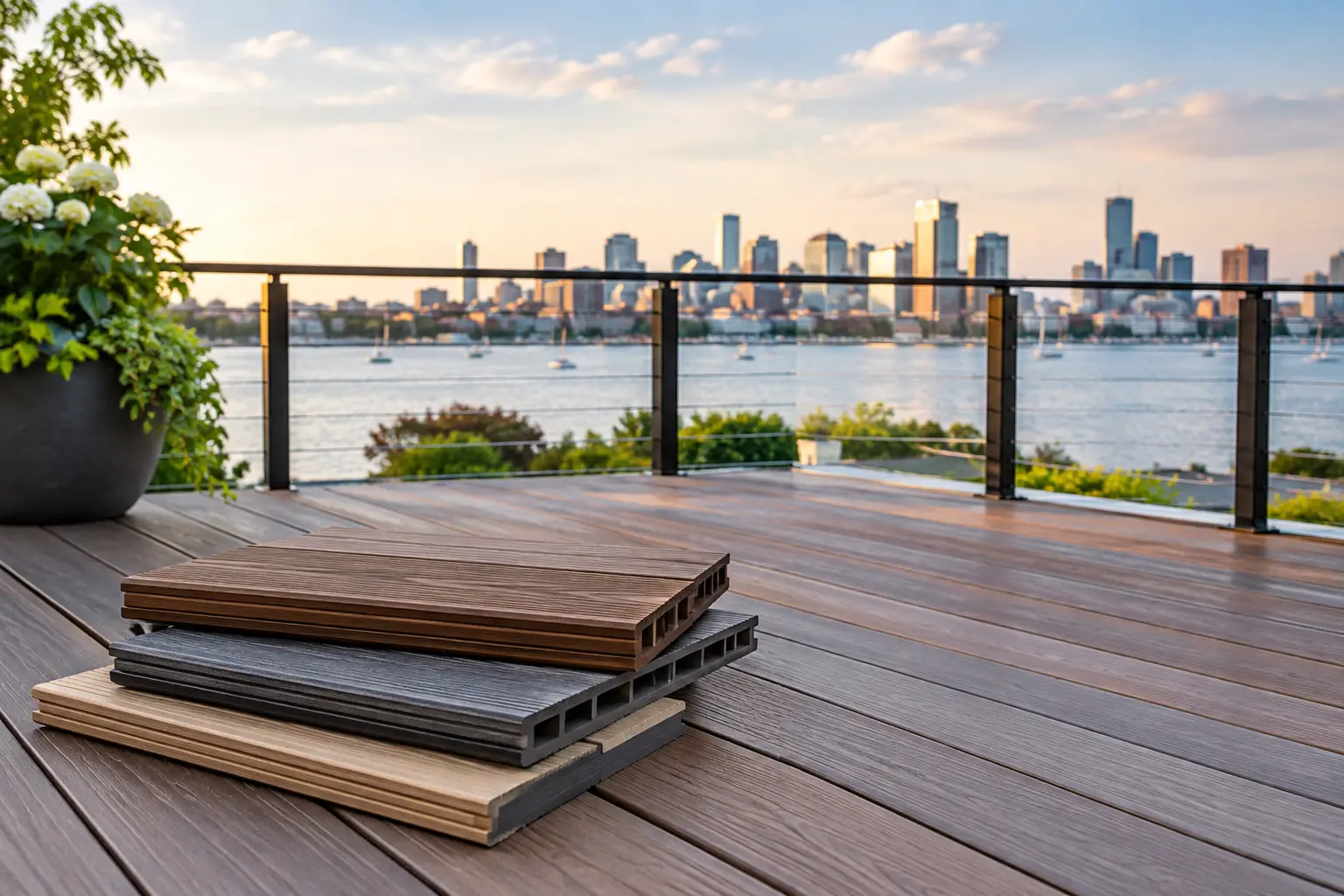
Composite railing is a popular match for composite decking because it delivers a coordinated, low-maintenance finished look. It commonly uses a composite or PVC-based outer profile with internal reinforcement where needed, along with aluminum or composite balusters. Available colors, post caps, and lighting options can create a polished result without the need for regular staining or painting.
This material works particularly well for homeowners replacing an aging wood deck with a more durable outdoor living space. It resists rot and insect damage and generally requires only washing to remove dirt, pollen, and mildew. It also maintains a consistent appearance longer than unfinished wood.
Composite railing costs more upfront than basic wood, and product systems need to be installed according to their manufacturer requirements. Posts, brackets, fasteners, and reinforcement cannot be treated as interchangeable details. Some composite profiles can also feel bulkier than metal railings, which matters when preserving a view is a priority. Still, for a clean, cohesive deck with lower maintenance demands, composite is often one of the strongest overall choices.
Aluminum Railing
Aluminum railing is a durable, clean-lined option that works with both wood and composite decks. Its powder-coated finish holds color well, and the material does not rot, warp, or require painting. Black aluminum is especially common because it offers a classic appearance while visually receding against trees, landscaping, and distant views.
For many Greater Boston homeowners, aluminum provides a strong balance between cost, upkeep, and appearance. It is lighter and visually narrower than many composite systems, making the deck feel more open. It is also a good option when the deck design includes multiple stair sections, long runs of railing, or a modern exterior update.
The main consideration is installation quality. Aluminum systems require accurate post placement, level rails, properly secured brackets, and suitable structural blocking below the deck surface. A railing can look straight on installation day but develop movement later if the posts and connections were not planned correctly. Aluminum is low maintenance, not no maintenance: seasonal washing and a check of screws, brackets, and post stability are still worthwhile.
Cable Railing
Cable railing uses horizontal stainless steel cables between posts to create minimal visual obstruction. It is often chosen for decks overlooking a backyard, woods, garden, or water because it keeps sightlines open far better than conventional balusters.
The clean look comes with real structural requirements. Cable tension places force on end posts, corner posts, and the deck framing that supports them. Those components must be designed and reinforced appropriately. Cables also need correct spacing and tension to satisfy code requirements, and they require periodic adjustment as the system settles or cables relax.
Cable railing is usually a premium choice. It can be an excellent fit for a modern deck with a view, but it is not always the best choice for every household. Horizontal lines may be less desirable for families concerned about climbing, and the system needs more attention during installation than a standard baluster railing. It works best when included in the deck plan from the beginning rather than added as an afterthought.
Vinyl Railing
Vinyl railing offers a bright, traditional look and is common on porches, entry platforms, and lower decks. It does not need painting, resists moisture, and is easy to wash. White vinyl can pair well with homes that already have white trim, columns, or siding details.
Its limitations are largely aesthetic and structural. Vinyl can appear more substantial than aluminum, and lower-quality systems may become brittle or discolor with age and weather exposure. Most vinyl railing systems rely on internal reinforcement at posts or rails, so the details below the finished surface matter as much as the visible profile.
Vinyl can be a sensible choice when the goal is a low-maintenance traditional appearance at a controlled cost. It is less often the first choice for an expansive elevated deck where homeowners want a slim profile or unobstructed view.
How to Choose the Right Material for Your Deck
Start with the condition and design of the deck itself. If the deck framing, joists, ledger, or posts need repair, a new railing alone will not solve the larger safety issue. Railing posts transfer significant loads into the deck structure, so a contractor should evaluate those connections before selecting a system.
Next, decide how much maintenance you are realistically willing to take on. Wood has warmth and flexibility but needs regular protection. Composite, aluminum, and vinyl reduce finish maintenance, though each still needs basic cleaning and inspection. The lowest upfront price is not always the lowest long-term cost if repainting, repairs, or early replacement are likely.
Then consider the house and view. Painted wood and white vinyl work naturally with many Colonial and traditional Massachusetts homes. Black aluminum and cable railing often suit contemporary updates and preserve views. Composite provides the most coordinated appearance when paired with composite deck boards.
Finally, include code and permitting in the planning stage. A replacement project may expose conditions that do not meet current requirements, particularly around stair handrails, guard height, post connections, and baluster or cable spacing. Addressing these details before materials are ordered keeps the schedule more predictable and helps avoid last-minute changes.
A Better Way to Plan a Railing Replacement
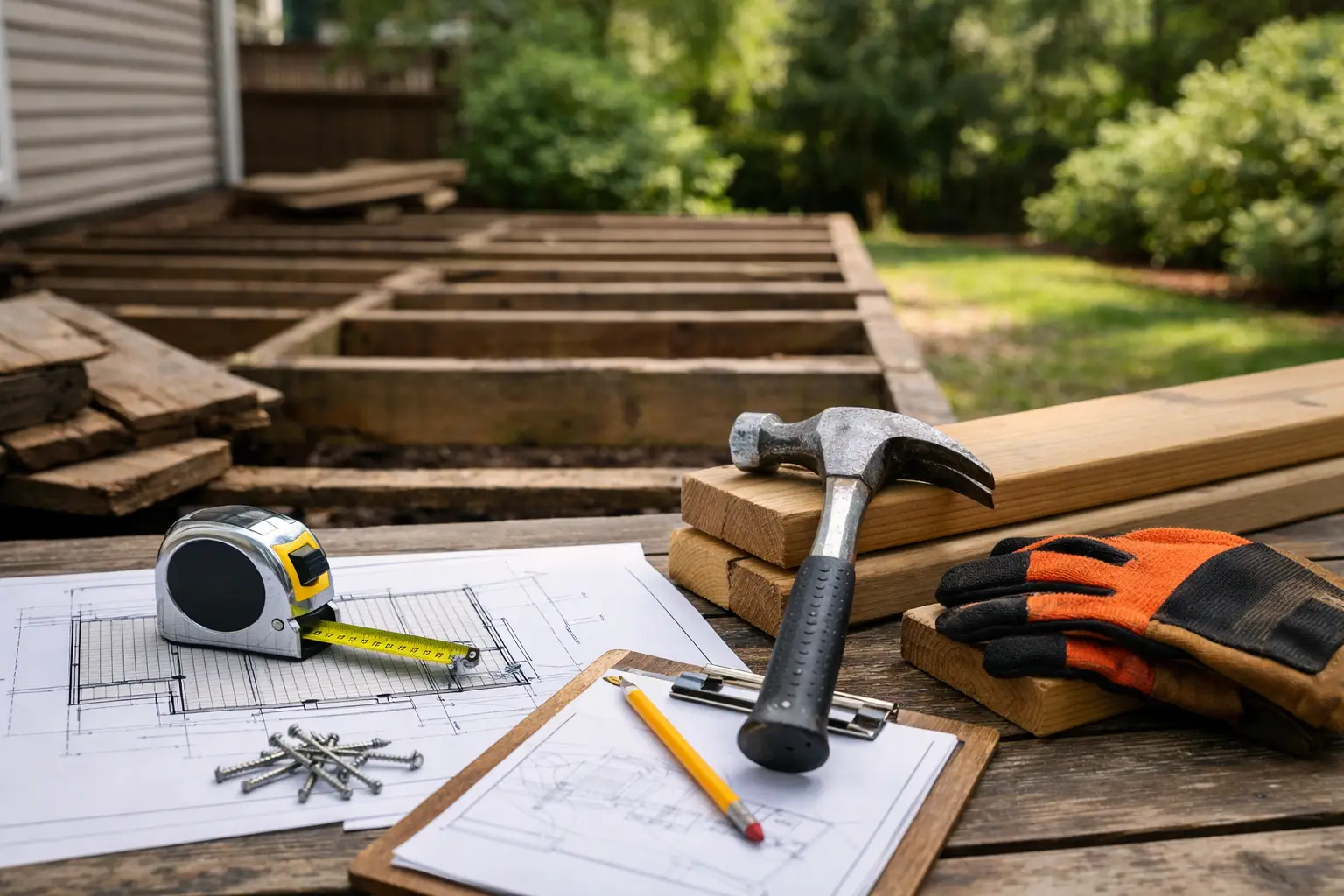
A reliable railing project begins with an on-site assessment, not a product catalog. Measure the deck, inspect the existing structure, identify stair and landing conditions, and confirm whether the scope involves a simple railing replacement or broader deck repair. From there, the material can be matched to the home, budget, and expected level of maintenance.
LA Classic Builder approaches exterior projects with that full-picture mindset: clear scope, sound structural details, code-conscious planning, clean installation, and a final walkthrough. The goal is not simply to install rails. It is to leave homeowners with an outdoor space that feels secure, finished, and ready to use.
If your current railing feels loose, weathered, outdated, or does not meet your family’s needs, use the decision as an opportunity to look at the whole deck. The right material is the one that fits the structure beneath it, holds up to Massachusetts weather, and gives you confidence each time you step outside.