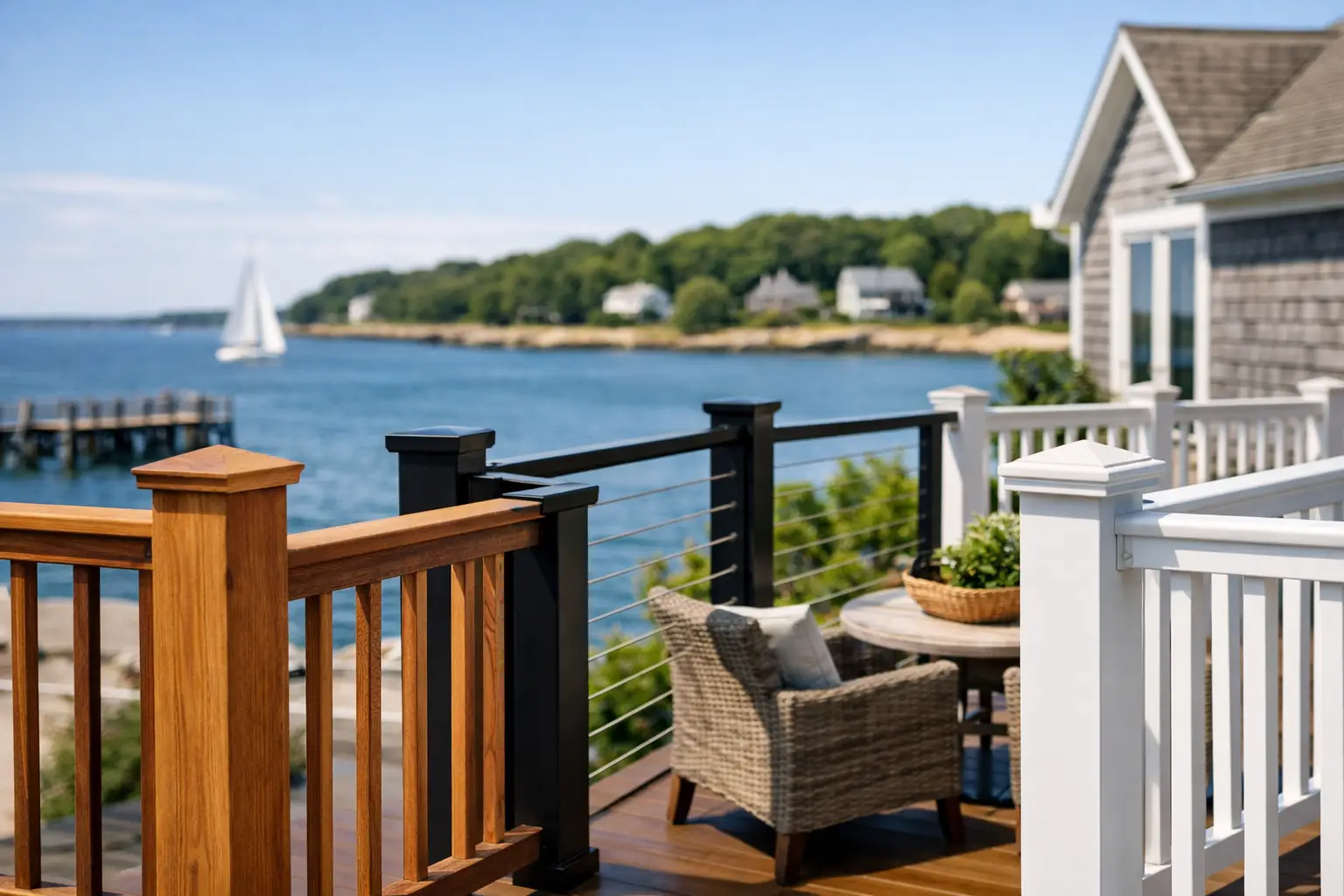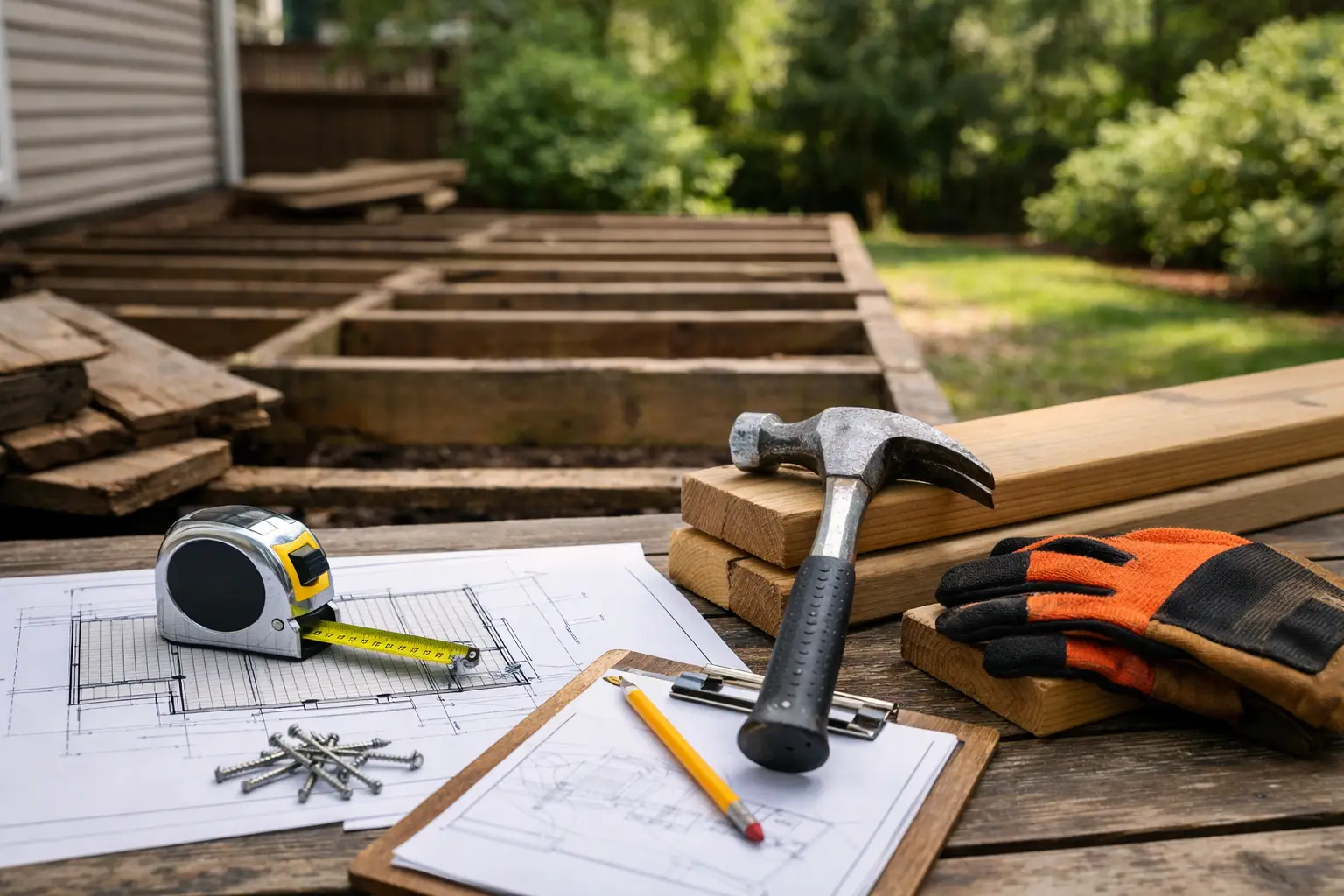

Deck Repair Versus Replacement: What Pays Off?
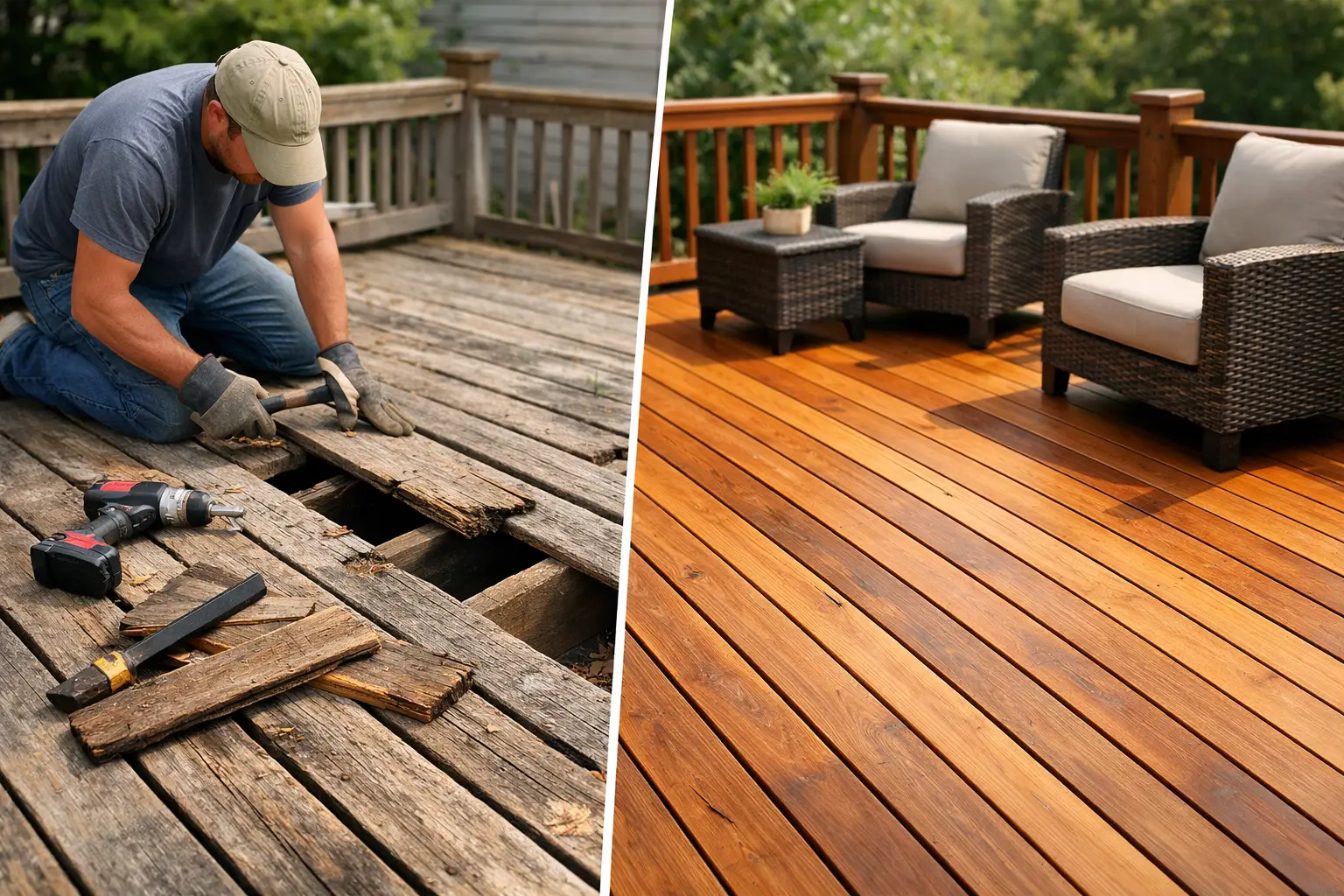
A soft board near the stairs, a railing that moves when you lean on it, or peeling stain across an otherwise solid deck can all raise the same question: deck repair versus replacement. The right answer is not based on appearance alone. It depends on where the deterioration is located, how much of the structure remains sound, and whether a repair will give your family a safe, worthwhile number of additional years.
For Greater Boston homeowners, decks face a demanding cycle of snow, rain, freeze-thaw movement, humidity, and strong summer sun. Small maintenance issues can become structural problems when water reaches the framing, fasteners, or connection at the house. A careful site assessment helps separate a manageable repair from a deck that has reached the end of its useful life.
Deck Repair Versus Replacement Starts Below the Surface
The visible deck boards are only one part of the system. A deck also relies on posts, footings, beams, joists, ledger connections, stairs, railings, flashing, and hardware. Replacing worn surface boards may improve the look of a deck, but it cannot correct rot in the framing or an unsafe attachment to the home.
A contractor should inspect the deck from the ground up. That means checking whether posts are decayed at grade, whether footings have shifted, whether joists are soft or split, and whether metal connectors are corroded. The ledger – the framing member where the deck meets the house – deserves particular attention. Water intrusion or improper fastening at this connection can create serious structural and moisture-related concerns.
This is why a deck that looks weathered is not automatically a replacement project, and a deck that looks acceptable from above is not automatically safe. The scope should follow the condition of the structure, not just the condition of the finish.
When Deck Repair Is the Better Investment
Repair is often a practical choice when deterioration is limited, the main framing is solid, and the existing deck still fits how you use the space. A targeted repair can restore safety and extend service life without the cost and disruption of rebuilding the entire structure.
Common repair situations include replacing a few rotted deck boards, rebuilding a loose stair run, upgrading damaged rail sections, replacing corroded fasteners, or correcting isolated framing damage. A deck may also need new flashing at the house connection, a refreshed protective finish, or localized repairs around posts and trim details.
Repair makes the most sense when the underlying design is sound. If the deck has stable footings, proper structural support, usable framing, and a layout you like, selective work can be a responsible way to protect your investment. It can also be a good option for homeowners planning a larger exterior renovation in a few years and needing to address immediate safety concerns first.
The key is to avoid cosmetic-only work when a structural correction is needed. Covering damaged boards with new material or adding stain over widespread deterioration may postpone the decision, but it does not improve the deck’s load capacity or safety.
Signs a Repair May Be Enough
A repair may be appropriate if the damage is confined to a small area, boards are worn but joists remain solid, railings need tightening or replacement, or stairs have localized problems. Fasteners can sometimes be upgraded, and a limited section of framing can be rebuilt when the surrounding members are in good condition.
Age alone should not decide the project. A well-built, well-maintained deck can remain a good repair candidate after many years. Conversely, a younger deck with poor drainage, inadequate flashing, or unsuitable materials may need more extensive work sooner than expected.
When Deck Replacement Is the Safer Choice
Replacement becomes the better value when multiple structural components are failing, repairs would be scattered across much of the deck, or the deck no longer meets your family’s needs. Repeated patching can cost more over time than building a new, code-compliant structure with a clear lifespan ahead of it.
Widespread rot in joists, beams, posts, or the ledger is a strong reason to consider replacement. So are unstable footings, significant movement, extensive corrosion, chronic water damage at the home, and railings or stairs that cannot be brought up to a safe standard without rebuilding major sections.
Replacement is also worth considering if you want to change the deck’s size, shape, stairs, railing style, or material. Trying to preserve an old frame while adding a larger layout or a heavier composite decking system can create design and structural limitations. A new build allows the framing, footings, drainage, connections, and finish materials to work together from the start.
For many homeowners, the decision becomes clear when the repair scope reaches a substantial portion of the deck. There is no universal percentage that applies to every project, but if boards, framing, railings, stairs, and support elements all need attention, a full replacement often delivers better long-term value and a cleaner finished result.
Safety Issues That Should Not Wait
Some conditions call for prompt professional evaluation rather than another season of use. Watch for bouncy or sagging areas, loose railings, cracked or leaning posts, soft wood near connections, visible rot at the base of posts, severely rusted hardware, and stairs that shift underfoot. Gaps or flashing problems where the deck meets the house also deserve attention.
If you notice these signs, limit use of the affected area until it has been inspected. A deck failure can happen suddenly, especially when deterioration is hidden inside framing members or at a connection point.
Cost Is More Than the Initial Proposal
Homeowners naturally compare the price of repairing a deck with the cost of replacing it. That comparison is useful, but the lowest immediate number is not always the least expensive path. A repair should be measured against the years of reliable use it is likely to provide and the likelihood of further work soon after.
For example, replacing surface boards on a solid frame can be efficient. Replacing boards on a frame with early rot may lead to another project when the hidden damage progresses. Similarly, rebuilding only one failing section can make sense when the rest of the deck is in strong condition. It makes less sense when the remaining sections are nearing the same point of failure.
Material choices affect the equation as well. Pressure-treated lumber typically has a lower initial material cost but needs periodic maintenance. Composite decking and certain railing systems can reduce routine upkeep, though they usually cost more upfront and still require proper framing, spacing, drainage, and installation. Neither material solves an inadequate structural design.
A clear estimate should identify what is being repaired or rebuilt, how the structure will be supported, what materials are included, and what conditions could affect the scope once concealed areas are opened. This gives homeowners a more realistic basis for deciding than a simple per-square-foot number.
Permits and Code Requirements Matter
Deck work may require permits depending on the scope, location, and local building requirements. In Massachusetts communities, replacement work, structural repairs, new footings, changes to stairs or railings, and changes to the deck’s footprint commonly involve permit-related considerations.
Current code requirements can affect railing height, baluster spacing, stair geometry, handrails, footing depth, structural connectors, and ledger attachment. A deck built years ago may not match current standards, particularly if it is being significantly altered or rebuilt. That does not mean every older deck must be replaced immediately, but it does mean the project should be planned with present safety requirements in mind.
An experienced contractor can help define the scope, identify permit needs, and build the work around code-compliant details. This protects the homeowner from avoidable delays and helps ensure the finished deck is safe, durable, and properly documented.
A Practical Way to Make the Decision
Start with an honest assessment rather than choosing a material or design first. Photograph the concerns you can see, note areas that feel soft or unstable, and think about how you want to use the deck over the next decade. If the layout is too small, stairs are inconvenient, or maintenance has become a recurring burden, those factors matter alongside the repair findings.
Then request a detailed on-site evaluation. Ask which components are sound, which require correction now, and what repairs are likely to be needed later if you do not replace the deck. A dependable proposal should explain the reasoning in plain language, not pressure you toward the largest possible project.
LA Classic Builder approaches deck projects with that practical focus: clear scoping, code-conscious construction, durable materials, clean finished details, and direct communication from the estimate through the final walkthrough. Whether the answer is a focused repair or a complete rebuild, the goal is the same – a deck your household can use with confidence.
The best next step is to address questionable areas before a busy outdoor season or another Massachusetts winter adds more moisture damage. A professional evaluation can turn an uncertain repair-versus-replacement decision into a realistic plan for a safer, longer-lasting outdoor space.